

Key Takeaways
- A roof + solar bundle combines both projects into one, typically saving 10–20% compared to doing them separately.
- Financing options include solar loans (you own the system and claim the 30% federal tax credit), leases/PPAs ($0 down but no tax credit), or cash purchase.
- The full project timeline from contract to live system is typically 8–16 weeks, depending on permits and utility queue times.
- Always confirm whether the company uses its own crews or subcontracts roofing work — this affects warranty accountability.
Table of Contents▼
What Is a Roof + Solar Bundle?
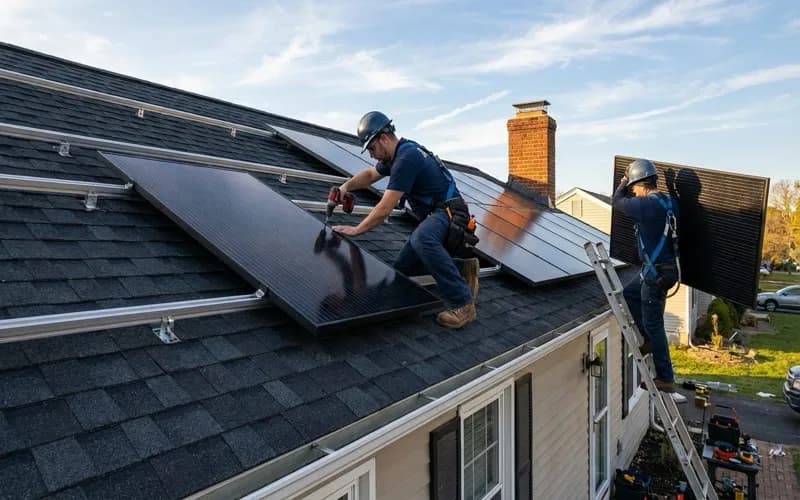
A roof + solar bundle — sometimes called a "roof and solar package" or an "integrated roofing and solar program" — is exactly what it sounds like: a single contractor handles both your roof replacement and your solar panel installation as one coordinated project. Instead of hiring a roofer, waiting for the job to finish, and then hiring a separate solar company, a bundled program manages the entire process under one roof (pun intended).
The concept was pioneered in New England around 2022 by Evergreen Solar Corporation, which developed an integrated program pairing CertainTeed roofing systems with American-made solar panels. The logic was simple: if your roof is being replaced anyway — whether it's aging, damaged, or simply reaching end of life — the incremental cost of adding solar during the same project is significantly lower than tackling both projects separately. Other companies have since followed suit, including Trinity Solar, Sunergy Solutions, and several smaller regional contractors.
For many New England homeowners, this makes intuitive sense. Our homes tend to be older — Massachusetts has some of the oldest housing stock in the country, with a median home age well above the national average. Asphalt shingle roofs typically last 20–30 years, which means a large portion of New England homes either need a new roof soon or will within the decade. If you're planning to add solar, pairing it with a roof replacement is smart sequencing: you get a solar-ready roof from day one, avoid the cost of a second mobilization later, and can potentially bundle the financing.
How the Financing Works
This is where bundle programs get interesting — and where homeowners need to pay close attention. Bundled programs typically offer several financing structures, and the right choice depends on your tax situation, how long you plan to stay in the home, and your financial goals.
Solar Loans (Purchase with Financing)
A solar loan works like a home improvement loan or an auto loan: you finance the full cost of the project (roof plus solar) and own the system outright from day one. Monthly payments go toward repaying the loan principal plus interest. Loan terms typically range from 10 to 25 years, with interest rates varying based on your credit and the current market.
The major advantage of a solar loan is that you own the system and can claim the federal Investment Tax Credit (ITC), which in 2026 is worth 30% of the total project cost. On a $40,000 bundle project, that's a $12,000 federal tax credit — a substantial benefit that loan customers capture fully. State tax credits and incentives (like Massachusetts' Solar Tax Credit) are also available to system owners.
The downside: you're taking on debt. Your monthly loan payment may be comparable to or slightly higher than your current electric bill, though over time as utility rates rise, the math typically improves significantly.
Leases and Power Purchase Agreements (PPAs)
With a solar lease or PPA, a financing company owns the solar system. You pay either a fixed monthly lease payment or a per-kilowatt-hour rate for the electricity the panels produce. The appeal: zero money down, predictable monthly costs, and no responsibility for system maintenance or repairs (those stay with the equipment owner).
Leases and PPAs are what most companies mean when they advertise "no money down" or "$0 out of pocket." The bundle financing structure essentially wraps the cost of the roof replacement into the overall project, and the monthly payment is structured to be competitive with — or lower than — your current electric bill.
The important trade-off: you don't own the system, so you can't claim the federal tax credit. You also need to think carefully about what happens when you sell the home. Leases and PPAs are typically transferable to new buyers, but some buyers may be hesitant, and the process adds a step to the sale.
Cash Purchase
If you have the means, paying cash for a bundle typically offers the best long-term return. You capture the full federal tax credit, have no loan interest eating into your savings, and own the asset outright. Many homeowners also find that a bundle adds meaningfully to resale value — buyers appreciate a new roof and a paid-off solar system.
The Bundle Financing Math: A Real Example
Let's say your project involves a roof replacement ($18,000) and a 10kW solar system ($30,000), for a total of $48,000. Here's how the numbers might look:
- Cash purchase: Pay $48,000, claim $14,400 federal tax credit, net cost $33,600. System generates $1,800+/year in savings; payback period 10–12 years.
- Solar loan (7%, 20 years): Monthly payment approximately $372. Federal tax credit of $14,400 can be applied to principal, reducing effective balance to $33,600 if applied early. Over 20 years, you pay more in total due to interest, but you own the system.
- Lease/PPA ($0 down): Monthly payment $150–200 (structured to be below your current electric bill). No tax credit. After 20–25 years, you can buy out the system, extend the lease, or have it removed.
These are illustrative figures — your actual numbers will depend on your roof size, your home's solar potential, local utility rates, and the specific company's pricing. Always get a detailed proposal with line-item costs before committing.
What's Included in a Bundle
The specific scope of a bundle varies by company, but a complete bundle program should include all of the following:
Roofing Scope
- Full tear-off: Removal of existing shingles and underlayment down to the decking
- Deck inspection and repair: Assessment of the plywood or OSB sheathing, replacement of damaged sections
- Ice and water shield: Critical in New England — a waterproof membrane along eaves, valleys, and penetrations to prevent ice dam damage
- New underlayment: The moisture barrier beneath the shingles
- New shingles: The visible roofing material (quality varies by company — see our rating methodology for details on what we look for)
- Flashing replacement: Metal flashing around chimneys, skylights, and roof penetrations
- Ventilation: Ridge vents, soffit vents, or other ventilation systems
The best bundle programs use premium shingles — Evergreen Solar uses CertainTeed Landmark, a 50-year rated shingle. Some competitors use lower-tier products to reduce cost. Ask specifically what shingle you're getting and look it up before you sign.
Solar Scope
- Solar panels: Typically monocrystalline silicon panels with 370–400+ watt output per panel
- Inverter(s): The device that converts DC power from panels to AC power for your home. String inverters or microinverters (microinverters cost more but perform better in partial shade)
- Mounting system: Racking hardware that attaches panels to your roof
- Wiring and conduit: Electrical connections from panels to inverter to your main panel
- Main panel upgrade (if needed): Some older homes need an electrical panel upgrade to support solar — confirm whether this is included
- Utility interconnection: The paperwork and utility coordination to connect your system to the grid
- Monitoring system: An app or portal to track your energy production
One important detail: the solar panels should be installed on the new roof after the roofing is complete (or integrated as part of the roofing installation for building-integrated products). A reputable bundle company coordinates these sequences carefully to avoid any risk of roof damage.
The Project Timeline
A roof + solar bundle project moves through several distinct phases. Here's what to expect from initial consultation to final inspection:
Phase 1: Consultation and Design (2–4 weeks)
Your first meeting (usually at your home) covers a site assessment, your roof's condition, your energy usage history, and your financing options. After signing an agreement, the company will pull your utility bills, design the solar system to your home's specific roof planes, and prepare permits for both the roofing and electrical work.
Phase 2: Permitting (2–6 weeks)
This is often the longest wait in the process. Permits are required for both the roofing work (in most Massachusetts and Rhode Island municipalities) and the solar electrical installation. Your company handles the permit applications. Processing times vary enormously by town — some towns turn around permits in two weeks, others take six or more.
Phase 3: Roofing Installation (1–3 days)
Once permits are approved, the roofing crew arrives. For a typical New England colonial, roofing takes one to three days depending on complexity (dormers, multiple pitches, and multiple chimneys add time). Weather windows matter — roofing is weather-dependent, and our springs and falls can be unpredictable.
Phase 4: Solar Installation (1–2 days)
After the roof passes inspection and is verified as complete, the solar crew arrives — sometimes the following week, sometimes the same crew transitions directly if it's the same company. Panel installation and wiring typically takes one to two days for a residential system.
Phase 5: Utility Interconnection (2–6 weeks)
Before you can export power to the grid or participate in net metering, your utility needs to inspect the installation and approve interconnection. Massachusetts utilities — Eversource, National Grid, and Unitil — have their own timelines for this process. Once approved, your system is live and your monitoring app lights up.
Total time from contract to live system: Typically 8–16 weeks, depending heavily on permitting speed in your town and utility queue times. Your company should give you milestone estimates and keep you updated throughout.
Who Installs What: Understanding Licensing and Credentials
In New England, both roofing and solar installation involve licensed trades. Understanding who does what work — and what credentials they should have — helps you evaluate companies and ask the right questions.
Roofing Licenses
Massachusetts requires home improvement contractors to be registered with the Office of Consumer Affairs and Business Regulation (OCABR). Roofing contractors doing work over $1,000 must hold a Home Improvement Contractor (HIC) registration. Commercial work requires a Construction Supervisor License (CSL). Rhode Island and Connecticut have similar requirements.
Beyond licensing, look for manufacturer certification programs. CertainTeed ShingleMaster PREMIER (the highest CertainTeed tier, launched January 2026) and GAF Master Elite Contractor are among the most respected designations — companies with these certifications can offer significantly enhanced warranty coverage, including up to 50 years non-prorated on CertainTeed systems and up to 25 years workmanship on GAF systems.
Solar Electrical Licenses
Solar installation involves working with electricity, which requires a licensed electrician. In Massachusetts, solar installers need either an Electrical Journeyman or Master Electrician license for the wiring work. The National Electrical Code (NEC) governs installation standards.
The industry's leading professional credential is NABCEP (North American Board of Certified Energy Practitioners) PV Installation Professional certification. While not legally required, a NABCEP-certified designer or installer on your project is a meaningful quality signal — it indicates the company invests in professional training.
What About Subcontracting?
Many solar companies subcontract the roofing work to local roofing crews, and some roofing companies subcontract the solar installation to solar-specialized firms. Neither model is inherently bad, but it matters for accountability:
- If your roof leaks two years from now, who is responsible — the roofer or the solar company?
- Does the solar company have a relationship with the roofer to coordinate any future work?
- Are both the roofing warranty and the solar equipment warranty honored by a single point of contact?
We give higher ratings on our Roof + Solar Integration metric to companies with vertically integrated operations — meaning their own employees do both trades. Evergreen Solar and Trinity Solar are among the companies with more integrated operations in the New England market.
Warranties and Guarantees
A roof + solar bundle involves multiple warranty layers, and understanding what each covers is critical before you sign. Here's a breakdown:
Roof Warranties
Manufacturer's material warranty: Covers defects in the shingle material itself. Premium shingles like CertainTeed Landmark carry 50-year material warranties. These warranties are typically prorated — meaning coverage decreases over time.
Manufacturer's system warranty (enhanced): If your roofer holds a qualifying manufacturer certification (like CertainTeed ShingleMaster PREMIER), you may be eligible for SureStart PLUS — an enhanced warranty that covers materials, labor, tear-off, and disposal for up to 50 years non-prorated. This is dramatically more valuable than a standard prorated material-only warranty.
Contractor's workmanship warranty: The company's own warranty on the quality of their installation. Duration varies widely — some companies offer 5 years, others 10 or more. This is what protects you if there's a leak due to improper flashing or installation error rather than a product defect.
Solar Equipment Warranties
Panel warranty: Two types — a product warranty (typically 10–12 years, covering defects) and a performance warranty (25–30 years, guaranteeing the panels produce at least a specified percentage of their rated output — typically 80–90% by year 25).
Inverter warranty: String inverters typically carry 10-year warranties (extendable), while microinverters (like Enphase) offer 25-year warranties — a meaningful difference for a 25-year system.
Workmanship warranty: The solar company's installation warranty. This is distinct from the equipment warranties — it covers things like roof penetrations and waterproofing around mounting hardware. For bundle projects, confirm explicitly how roof-solar penetrations are warranted.
Key Warranty Questions to Ask
- Is the roof warranty enhanced (covering both material and labor) or material-only?
- What happens to the roof warranty if the solar panels need to be removed in the future?
- Who handles warranty claims — the company directly, or do they route you to the manufacturer?
- Is there a single point of contact for both roof and solar warranty issues?
Is a Bundle Right for You?
A roof + solar bundle makes excellent sense for many New England homeowners — but not everyone. Here's how to think about whether it's right for your situation.
Bundle Programs Work Best When...
- Your roof is aging: If your roof is 15+ years old, needs repairs, or is approaching end of life, bundling with solar makes strong financial sense. You're going to replace the roof anyway — doing it alongside solar reduces the net cost of the solar project.
- You plan to stay in the home: The financial benefits of solar — whether through ownership or a lease — accumulate over time. If you're planning to move in 2–3 years, the math is less compelling.
- Your roof has good solar exposure: South-facing roof planes with minimal shading produce the most power. A good company will assess your solar potential before recommending a system size.
- Your monthly electric bill is $100+: Homes with higher electricity usage see stronger financial returns from solar. A $60/month electric bill may not justify the investment as quickly as a $200/month bill.
- You're in Massachusetts, Rhode Island, Connecticut, Southern New Hampshire, or New Jersey: All five states have net metering programs and incentives that improve the financial case for solar.
When to Think Carefully...
- Your roof is recently new (under 10 years): If your roof was replaced within the past decade, you may be better served by a solar-only installation on your existing roof.
- Heavy shading: Mature trees over your roof plane will significantly reduce system output. Pruning or tree removal can help, but adds cost and complexity.
- Your roof has complex geometry: Hips, multiple valleys, dormers, and skylights make both roofing and solar more expensive. Get quotes for your specific home.
- You plan to sell soon: If you're leasing, you'll need to transfer the lease to the buyer — some buyers object. If you're buying, confirm your resale market is solar-positive (in Massachusetts, it strongly is).
Take our 5-minute "Is a Bundle Right for You?" quiz for a personalized assessment based on your home and energy usage.
How to Choose the Right Company
Not all bundle programs are created equal. Some companies have deeply integrated, vertically operated programs — trained crews for both trades, premium materials, strong warranties, and established track records. Others have hastily assembled programs in response to market demand, using subcontractors with variable quality and limited bundle-specific experience.
When evaluating companies, we recommend looking at five criteria (the same ones we use in our rating methodology):
- Roof + Solar Integration (20%): Is the bundle a core offering or an afterthought? Single project manager, unified warranty, in-house crews?
- Roof Quality & Warranty (20%): What shingle brand and tier? Manufacturer certifications? Warranty depth and roofing team accountability?
- Solar Quality & Equipment (20%): What panel brand? Inverter type? Battery storage options? NABCEP certified?
- Reputation & Reviews (20%): Google rating and volume, BBB standing, industry awards, years in business, track record
- Pricing & Financing (20%): Are prices transparent and competitive? $0 down available? Multiple financing options (cash, loan, lease, PPA)?
Our full company reviews apply this framework to every company in our database. Start with our company comparison hub or see our top picks for Massachusetts homeowners.
For a deeper dive into what to look for when evaluating any company, see our guide: What to Look For in a Roof + Solar Company.
Why Your Roof Quality Directly Impacts Your Solar ROI
Most bundle guides focus on financing and incentives — but there's a critical factor that determines whether your bundle investment pays off over the full 25+ year horizon: the quality of the roof underneath your panels.
Roof degradation under solar panels is a real concern. While panels protect the shingles directly beneath them from UV exposure, the areas around mounting brackets are subjected to concentrated water flow and thermal cycling. Cheap roofing materials or improper installation at these points can lead to premature failure — and the costs cascade from there.
The timeline mismatch problem: A standard builder-grade roof might last 20 years. Solar panels are warrantied for 25. If your roof fails at year 12, you're facing a $5,000–$10,000 bill to remove your panels, a $15,000–$25,000 roof replacement, and then another round of mounting hardware installation — on a solar system that was supposed to be maintenance-free. A premium 50-year roof avoids this entirely.
Penetration risk from mounting hardware: A typical residential solar array creates 40–80 penetration points in your roof membrane. Each one is a potential leak path if not properly flashed and sealed. Certified contractors — particularly those with CertainTeed ShingleMaster PREMIER or GAF Master Elite credentials — follow manufacturer-specified installation protocols that standard roofers may not. This is perhaps the strongest argument for the integrated bundle approach: when the same company controls both the roofing and solar installation, the flashing, penetrations, and underlayment are all designed to work together from day one.
The Bottom Line
A roof + solar bundle is one of the smartest financial moves available to New England homeowners with an aging roof and meaningful electricity costs. By combining two major projects — a roof replacement and solar installation — you reduce the incremental cost of each, simplify project management, and set yourself up for decades of lower energy bills.
The key is choosing the right company. Bundle programs vary significantly in quality, warranty coverage, material standards, and financial structure. An underpowered system installed on cheap shingles with fragmented warranty responsibility is not a good bundle — it's a liability waiting to happen. A premium program from a company with integrated operations, certified installers, manufacturer-backed warranties, and a proven track record is a genuine value.
New England's climate makes this decision both more complex and more rewarding than in the Sunbelt. Our winters are harsh, our homes are older, and our electricity rates are among the highest in the nation — all of which make a high-quality, correctly installed roof + solar system especially valuable here. A system designed and warranted for our conditions, by a company that understands nor'easters, ice dams, and Cape Cod roof geometries, is worth the research.
Ready to explore your options? Use our solar savings calculator to estimate your potential savings, then get matched with a top-rated company for a free consultation. Our matching process connects you with companies that serve your area and fit your situation — at no cost to you.
Ready to Get Started?
Get a free consultation with a top-rated New England roof + solar company. No pressure, no obligation.
Get Matched Now →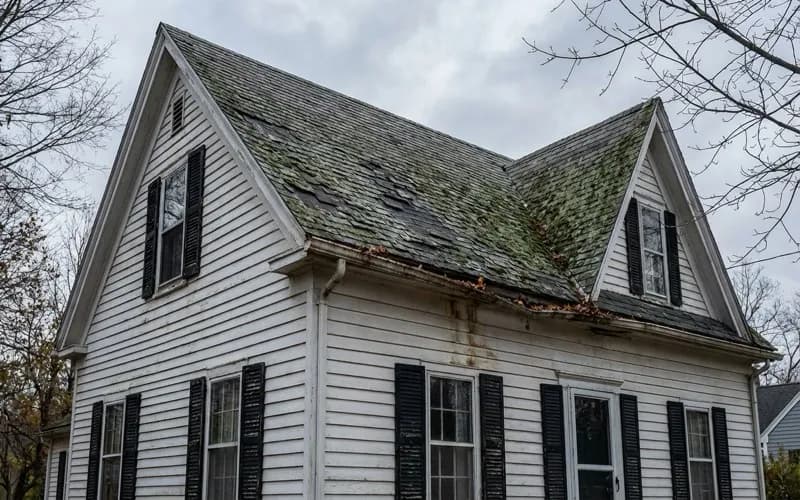
Before
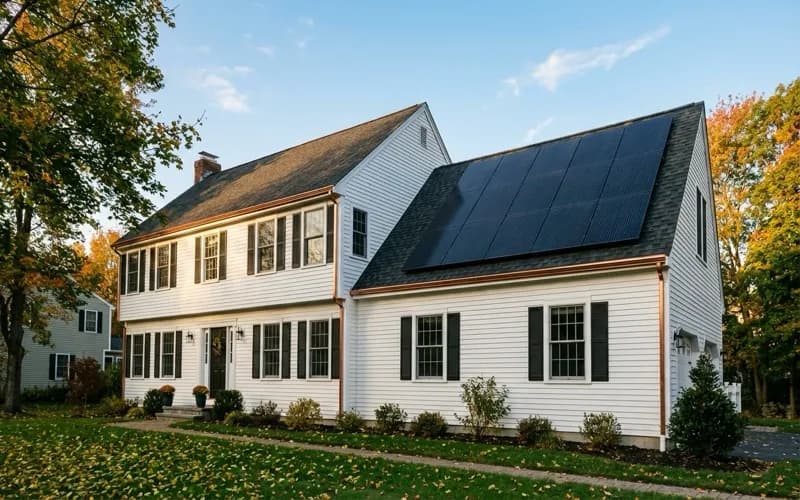
After
Find the Right Company for Your Home
Our free matching service connects New England homeowners with top-rated roof + solar companies. Get a no-pressure consultation with a company that serves your area.
Get Your Free ConsultationFree · No obligation · Serving MA, RI, CT, Southern NH & NJ
About the Author
Daniella Reeves
Lead Solar Editor
Daniella Reeves has spent more than a decade covering renewable energy and clean technology for regional publications across New England. Based in Worcester, Massachusetts, she brings a homeowner's perspective to every analysis — she installed solar on her own 1970s colonial in 2021. Daniella focuses on helping New England families understand the financial and practical realities of going solar.
Related Guides
Can You Really Get a Free Roof with Solar? (The Honest Answer)
Solar companies love advertising a "free roof" — but nothing in home improvement is actually free. Here's what the $0 out-of-pocket promise really means, when it's a legitimate offer worth taking, and when it's a red flag you should run from.
What to Look For in a Roof + Solar Company: The Complete Evaluation Guide
A roof + solar bundle is a $40,000–$60,000 decision. The difference between the right company and the wrong one can mean decades of headaches — or decades of trouble-free savings. Here's exactly what to look for, and what questions to ask before you sign.
Why Your Roofer's Certification Matters More Than the Shingle Brand
Most homeowners obsess over which shingle brand to choose — but the installer's certification often matters more. Here's how contractor credentials affect your warranty, your coverage, and your long-term protection.
Why Roof Quality Matters More Than You Think in a Solar Bundle
Solar shoppers focus on panels, inverters, and energy savings — but the roof underneath is a 50-year structural investment that determines whether your solar system thrives or becomes a costly problem.
Ready to Get Started?
You've done your research. Now get matched with a top-rated New England roof + solar company for a free, no-obligation consultation.
Get Matched with a Top CompanyFree · Fast · No pressure · Serving MA, RI, CT, Southern NH & NJ